The press is chosen by run length, colour count and substrate — not by the artwork and not by which machine is "better". Flexo prints paper bags from a roll: cheap per piece at volume, excellent solid colour, weak gradients, plates cost money. Offset prints flat sheets — boxes, tags, sleeves: photographic image quality, finer text, higher setup, economical from a few hundred to tens of thousands. Digital has no plates at all: unbeatable for 1–500 pieces and variable data, expensive per piece beyond that, and it still needs a die and hand assembly for anything three-dimensional.
Most packaging complaints about print quality are not a printer's mistake — they are a press mismatch: a photographic gradient sent to flexo, or a 300-piece order priced on offset setup.
The three methods in one line each
Flexo (flexographic) printing uses a flexible photopolymer plate wrapped around a cylinder, with ink transferred by an engraved anilox roller. It prints on a continuous roll, which is why it pairs naturally with bag-making: the roll goes straight from the press into the bag machine without being cut into sheets first. Water-based inks, fast drying, and the cheapest per-piece cost at volume.
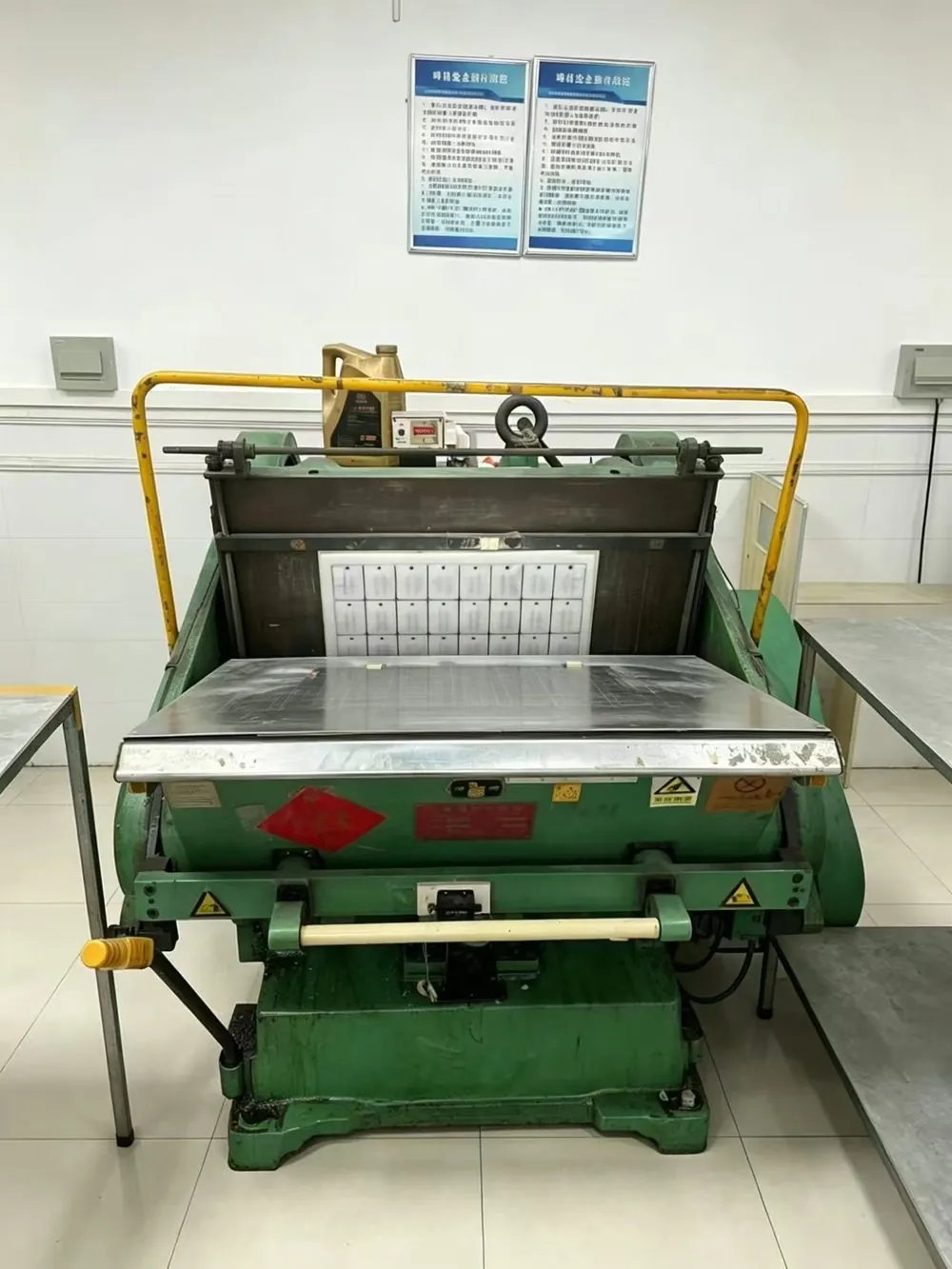
Offset (lithographic) printing transfers ink from a plate to a rubber blanket and then to a flat sheet. The blanket is what gives offset its edge: it prints fine detail and photographic images on coated stock better than any other conventional process, and it handles small type far more cleanly. Sheets then go to die-cutting, gluing or mounting.
Digital printing is toner or inkjet straight from a file, with no plate and no make-ready. Nothing to set up means nothing to amortise, which is why it wins below a few hundred pieces — and why its per-piece cost barely moves as the quantity rises.
Side-by-side comparison
| Factor | Flexo | Offset | Digital |
|---|---|---|---|
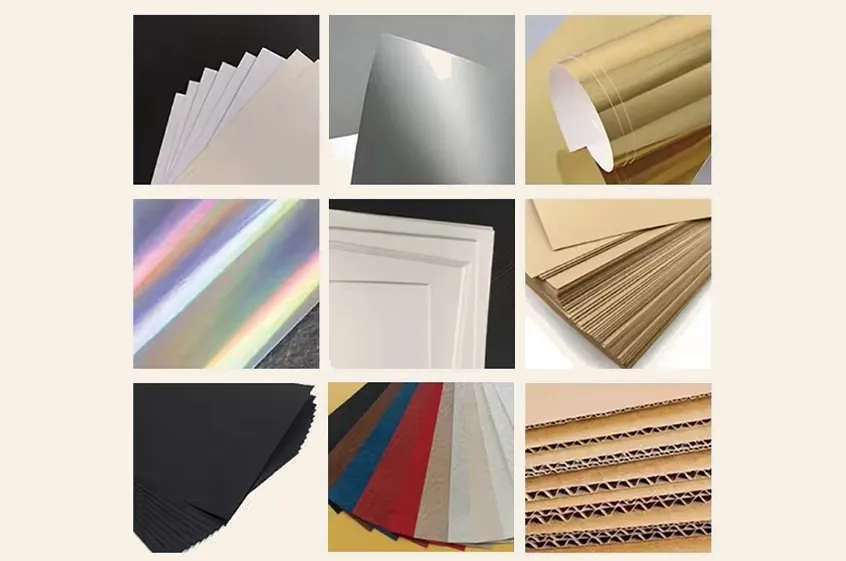
| Substrate | Roll: kraft, art paper, board up to ~350 gsm | Flat sheet: art paper, board, grey board wrap | Sheet or roll, coated stock preferred |
| Plate / setup cost | USD 30–80 per colour | USD 15–30 per colour (CTP) | None |
| Sensible run length | 1,000 – 500,000+ | 500 – 50,000 | 1 – 500 |
| Screen ruling | 85–120 lpi | 175–200 lpi | Continuous tone |
| Solid colour | Excellent — best in class | Very good | Good; large solids can mottle |
| Gradients & photos | Weak — bands and muddies | Excellent | Very good |
| Smallest text | ~6 pt, 0.3 mm line | ~4 pt, 0.1 mm line | ~5 pt |
| Spot / Pantone | Yes, one plate per colour | Yes, one plate per colour | Simulated only |
| Variable data | No | No | Yes — every piece different |
| Typical lead time | 10–20 days incl. plates | 12–20 days incl. plates | 3–7 days |
The lead-time line includes plate making, which is 2–5 days and is the reason a "rush" print job cannot actually rush: the plates have to exist before the press can run. If a supplier promises three days on a first flexo or offset order, either the plates already exist for that artwork or the deadline is being quoted by someone who has not scheduled it.
Flexo: why almost every paper bag is printed this way
A paper bag is made from a roll. That single fact decides the press. On a flexo line the printed roll feeds directly into the bag machine — print, cut, glue and handle in one continuous process, with no intermediate handling and no sheet stacking. Running the same job on offset would mean printing sheets, cutting them down, and then feeding a separate bag line, which adds handling cost that no print quality can repay on a retail bag.
Flexo's second advantage is ink laydown on uncoated stock. Kraft and uncoated art paper drink ink; flexo's heavier ink film sits on top and gives a dense, opaque solid where offset would look washed out. This is why the deepest, most saturated retail bags are almost always flexo — the colour is physically thicker.
The trade-off is detail. At 85–120 lpi the halftone dots are visible under close inspection, and anything that depends on subtle tonal change — skin tones, soft shadows, a sunset — will look coarse. Our own flexo line runs up to six spot colours, which is generous for packaging and covers most brand palettes with true spot inks rather than a CMYK build. Six plates is also where the economics sit: past six colours the plate and make-ready cost starts to compete with the run.
Offset: when the image has to be photographic
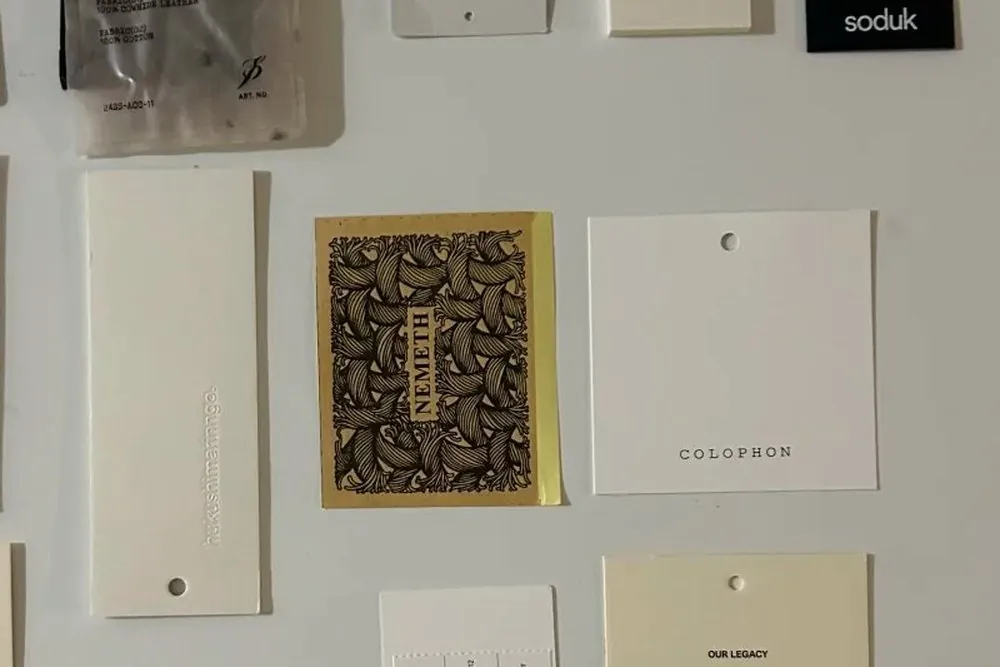
Offset enters the picture when the printed surface is flat and the image has to carry the product. Rigid box wraps, folding cartons, hang tags, header cards, sleeves, inserts — these are printed as sheets, so there is no roll-to-bag penalty, and the 175–200 lpi screen means photographs reproduce properly.
The practical test is this: if the artwork contains a photograph where the viewer will judge the product by it — food, cosmetics, jewellery, apparel on a hang tag — the job belongs on offset. If it contains a logo, a pattern, a colour block or type, flexo will match it at a lower cost per piece.
Offset also handles small type and fine rules that flexo cannot hold: legal text on a care label, ingredient lists on a box, 5 pt disclaimers. Below about 0.1 mm a flexo plate starts to fill in and the line breaks up, which is why fine-line artwork gets pushed to offset or to a label process rather than being "printed smaller" on flexo.
Digital: the honest limits
Digital is sold as the answer to small orders, and for flat printed items it largely is: labels, stickers, sleeves, box wraps, short-run tags, prototypes. No plate charge means a 100-piece run is economic, and variable data means every piece can carry a different name, code or language — something no conventional press can do at any price.
Where the promise breaks down is anything that has to be formed into a three-dimensional object. A paper bag needs a die, a make-ready and hand-gluing whether it is printed digitally or not, and those steps cost what they cost at 100 pieces. A rigid box needs greyboard wrapping, which is hand work. So the plate saving is real but it is a fraction of the total, and the per-piece print cost at 100 pieces is several times the flexo rate. For most packaging buyers the honest answer is: digital for prototypes and very short runs where time matters more than unit cost, flexo or offset once the design is settled.
There is a second, quieter limitation. Digital output on uncoated kraft is thin and slightly glossy where the toner sits, and it does not tolerate abrasion the way an ink film does — a digitally printed bag that rubs against a coat in transit will show wear at the edges. For samples this never matters. For retail, it does.
Why your gradient bands
This is the most common print complaint in packaging, and the mechanism is worth understanding because it is predictable.
A gradient is a series of very small steps in tone. Flexo prints those steps with a halftone screen at 85–120 lpi, so between two adjacent tone values there is a visible jump where offset would insert several finer steps. Stretch that gradient across a 30 cm bag face and the jumps line up into bands.
Two things make it worse. First, very light tints are unstable on flexo: below roughly 8% dot area the anilox roller delivers ink unevenly and the tint goes blotchy or drops out entirely, so a gradient that fades to near-white fails at exactly the end where the eye is looking for smoothness. Second, kraft shifts everything: printing on a brown base means every ink sits on a moving background, and a light tint that looks even on white art paper will look patchy on kraft.
Four fixes, in order of how often we recommend them:
- Compress the gradient — run it over 40–60 mm instead of the full face, so the same number of steps sits in a shorter distance and reads as smooth.
- Set a tint floor — end the fade at 10–12% instead of 0%, and let the paper colour finish the job.
- Replace the fade — a texture, a pattern, a duotone or a hard edge usually looks more deliberate than a banded gradient, and costs nothing.
- Move the job to offset — genuinely the right answer when the gradient is the design and the quantity supports a sheet-fed run.
What does not work is asking the press operator to "run it slower". Banding at this screen ruling is a structural limit, not a speed setting.
Spot colour vs CMYK
A spot colour is a premixed ink run from its own plate. A CMYK build is four process inks combined to simulate a colour. On packaging the difference is not academic:
- Brand colour — specify spot. A matched spot ink holds within roughly Delta E 2, which is below the threshold where most people can see a difference side by side. The same Pantone built in CMYK will drift between runs and between substrates.
- Photographs — CMYK, on offset. Four process inks build continuous tone; there is no sensible way to spot-colour a photo.
- Cost — every spot colour is another plate and another ink charge, so a five-spot job costs more to set up than a CMYK job even at the same run length. On a 1,000-piece order that setup difference is visible in the unit price.
- Kraft — print a white base coat under any light or bright colour going onto brown kraft, otherwise the ink takes on the paper tone. This is a plate and a pass, and it is the single most commonly omitted line in a kraft quote.
How to choose in four questions
Answer these in order and the press follows:
- Is the product formed from a roll? Paper bags, roll-fed sleeves → flexo. Flat sheets, box wraps, tags → offset or digital.
- Does the artwork contain a photograph or a long gradient? Yes → offset. No → flexo is cheaper.
- How many pieces? Under ~500 → digital. 1,000–50,000 → either, decided by question 2. Above 50,000 → flexo.
- Is there variable data? Names, codes, serials, per-market language versions → digital, no alternative.
If two answers conflict — a photographic gradient on a 200-piece paper bag, say — the constraint that costs more wins. In that example the bag's die and hand assembly dominate anyway, so print the proof digitally, approve it, and run the production batch flexo with the gradient compressed. That is a normal, costed compromise rather than a failure.
What to send with an inquiry
Print specification is six lines. Send these and the press choice, plate cost and lead time come back together:
- Product and construction — bag, box, tag, label, and whether it is formed from a roll
- Size — W × H × D in mm, flat or assembled
- Paper or board — type and gsm; say if it is kraft, because that changes the ink plan
- Artwork — vector file, with spot colours named by Pantone and photographs flagged
- Colour intent — which colours are brand-critical (they become spot) and which are decorative (they can build in CMYK)
- Quantity and destination market — quantity sets the press; market sets the ink and compliance requirements
One line saves more time than all six: tell us what the printed piece has to achieve — "the red must match our packaging exactly" or "this is a photo of the product and it has to look real". That one sentence usually decides the press before anyone opens the file.
Both presses are in the same building
We run roll-fed flexo up to six spot colours and a Roland 200 four-colour offset in the same workshop in Dongguan, so the press decision is made on cost and artwork rather than on what we happen to own. That matters most in the awkward middle: a job that would look better on offset but only justifies flexo at its quantity, or the reverse.
Send the artwork, the size and the quantity. We will tell you which press we would run it on, what the plates cost, and where the artwork would fail before it reaches a machine.
Common questions
Why does a gradient look banded on a paper bag but smooth on a box?
Because the two are printed on different presses. Paper bags are printed flexo on a roll, typically at 85–120 lines per inch, with ink metered by an anilox roller. That screen ruling is roughly half of what offset achieves, so a slow gradient that steps across 30 cm gives the eye fewer intermediate steps and reads as banding. Anilox metering also makes very light tints (under about 8%) unstable, so gradients that fade to near-white are the ones that fail. The fixes are to compress the gradient into a shorter distance, add a minimum tint floor, replace the fade with a solid or a texture, or move the job to offset if the run length justifies it.
Is digital printing cheaper for small packaging orders?
Only up to a point, and usually not for the whole product. Digital has no plate charge, so a 200-piece run can beat flexo or offset on the printing itself. But a paper bag or a rigid box still needs a die, a make-ready and hand assembly, and those costs do not shrink with the run. In practice digital wins on short-run labels, stickers, sleeves and box wraps, while a 200-piece paper bag order is usually better served by flexo with a shared plate setup or by starting at the 1,000-piece minimum. Ask for both numbers rather than assuming digital is the small-order answer.
Can a printer match a Pantone colour exactly?
With a spot ink, close enough that the difference is not visible: a matched spot colour is normally held within a Delta E of about 2, which is below the threshold most people can detect side by side. The caveat is that spot ink is a separate plate and a separate ink charge, so it is used for brand colours and small areas rather than for whole images. A Pantone specified in CMYK is a simulation and will drift, most visibly on kraft because the base colour already shifts everything printed on it. If the brand colour matters, specify spot and say so in writing.