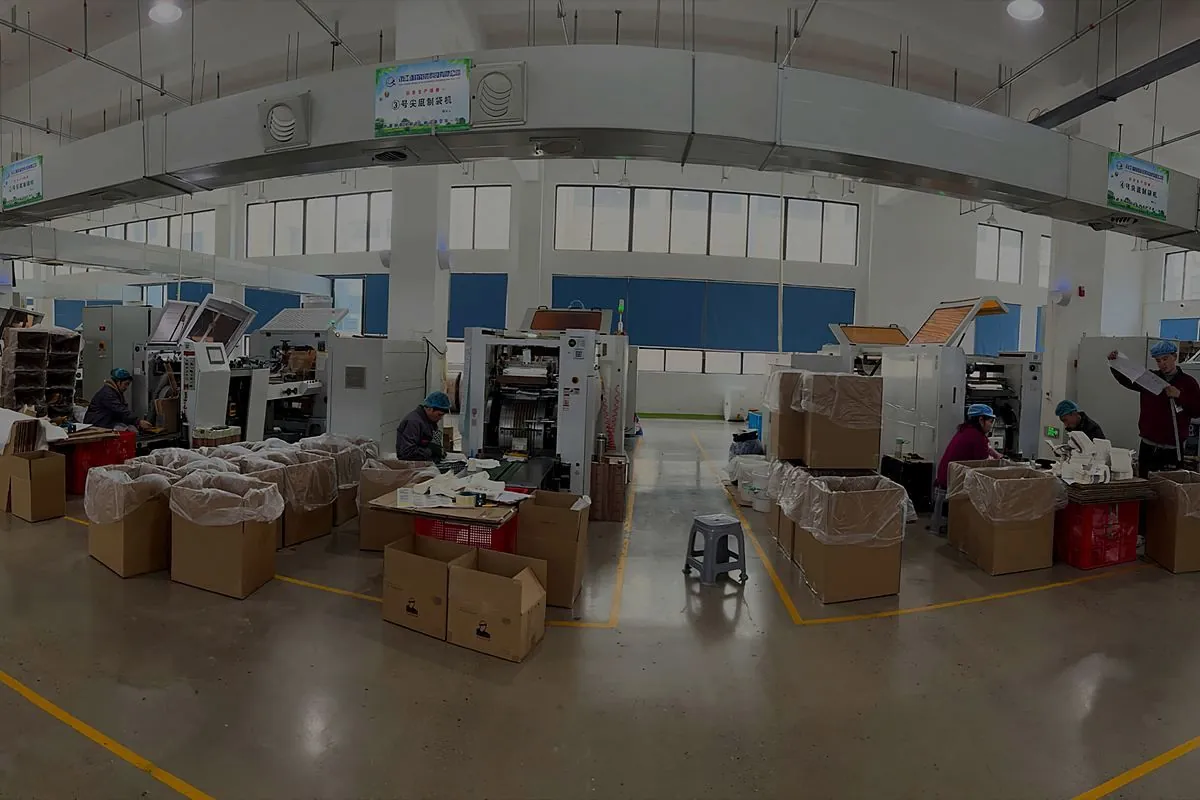
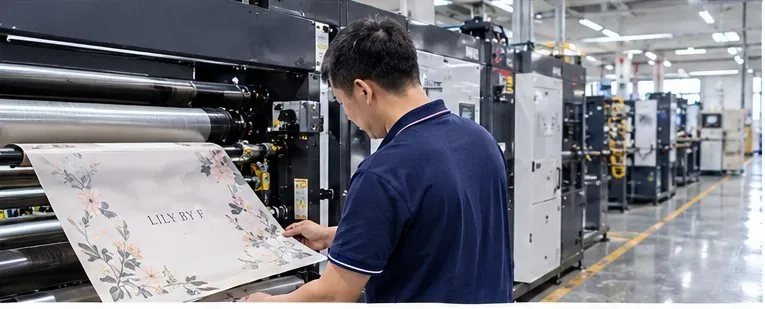
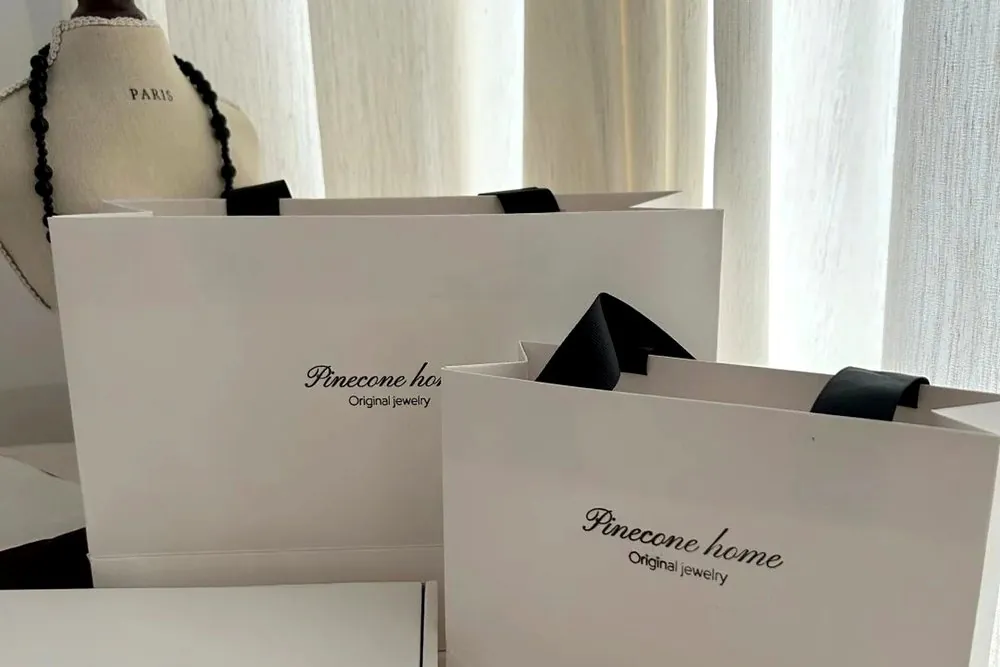
Chinese paper packaging concentrates in four clusters. The Pearl River Delta (Dongguan, Shenzhen, Guangzhou) makes the quality retail packaging — printed paper bags, rigid gift boxes, luxury finishing. The Wenzhou printing belt in Zhejiang runs the highest volumes at the lowest unit prices. Yiwu is the trading hub for small mixed orders. And Dongguang county in Hebei anchors the corrugated shipping-box trade.
Your product tier, order size and deadline decide which cluster fits — not a map of "who is cheapest". Written by a factory in the Pearl River Delta, so you can weigh our bias accordingly.
1. The Pearl River Delta — quality retail packaging
The corridor from Guangzhou through Dongguan to Shenzhen, in Guangdong province, is China's densest concentration of printing and packaging capacity. It is where most branded retail work gets done: laminated shopping bags for boutiques, rigid gift boxes for cosmetics and electronics, hang tags and woven labels for the garment industry sitting right next door in the same supply chain.
What the region is genuinely good at:
- Print and finish quality. Offset CMYK and high-end flexo capacity, plus hot foil, embossing, soft-touch lamination and spot UV — the finishing chain that luxury retail packaging depends on.
- Hand assembly at scale. Rigid boxes, ribbon handles, tissue inserts — the steps machines cannot finish — draw on a deep pool of skilled handwork that commodity regions struggle to staff.
- Sampling speed. Paper mills, film and ribbon suppliers, die-cutting shops and printing presses cluster within an hour of each other, so a strike-off sample moves in days, not weeks.
- Export logistics. Shenzhen and Guangzhou ports are close by; factories shipping weekly to Europe, North America and Southeast Asia know the paperwork cold.
The trade-off: unit prices run above the commodity regions, and because everyone claims to be "a factory in Dongguan", verification matters more here than anywhere — see section 6.
2. The Wenzhou printing belt — volume and price
Cangnan county and Longgang town in Wenzhou, Zhejiang, built their economy on printing. Longgang has been called China's printing town for decades; the belt prints and converts paper packaging at enormous volume, with cost structures that the Pearl River Delta cannot match for simple products.
What the belt is genuinely good at:
- High-volume simple bags and boxes. One- or two-colour kraft bags, standard folding cartons, food wrappers — runs in the hundreds of thousands where unit price is the whole conversation.
- Aggressive pricing on commodity constructions. Thin margins over huge volumes keep prices low for unbranded or lightly branded packaging.
- Flexibility on specifications. Many mid-size workshops will re-tool quickly for a repeating commodity order.
The trade-off: tight colour matching, soft-touch and specialty finishes, and complex hand assembly are harder to hold consistently. For branded retail packaging the quality gap is usually worth more than the price gap.
3. Yiwu — small orders, fast trading
Yiwu in Zhejiang is the world's largest small-commodity market, and packaging follows the goods. Packaging markets and trading companies there aggregate bags, boxes and printed trims from surrounding factories, selling mixed small quantities that no single factory would quote.
Yiwu makes sense when you need a few hundred generic bags for an event, samples across many SKUs, or packaging to bundle with goods you are already sourcing there. It makes less sense for branded retail programmes, where the layer between you and the actual press hides lead time and quality responsibility. Most "Yiwu factories" are trading companies — which is fine if you know that is what you are buying.
4. Hebei and the north — corrugated boxes
Dongguang county in Hebei is China's best-known corrugated-box base, with box plants and converting machinery clustered together, close to the northern paper mills and the Beijing–Tianjin–Hebei consumer market. If you are shipping plain or lightly printed corrugated shippers and mailers in domestic or short-haul volumes, the north is competitive. For export-grade printed retail boxes, the coastal southern clusters still dominate.
5. Matching your order to a region
A rough decision guide, from what we see buyers get right and wrong:
- Branded retail bags, gift boxes, anything with foil or soft-touch — Pearl River Delta. The finishing chain and handwork pool are the whole product; sourcing them from a commodity region and then fighting colour drift is a false economy.
- 100k+ simple bags, unbranded or one-colour — Wenzhou belt. Unit price wins and the print is simple enough that quality variance stays small.
- Under 1,000 pieces, mixed items, urgent — Yiwu traders, accepting that you are buying availability, not manufacturing.
- Corrugated shippers and mailers — the northern corrugated base for domestic and short-haul, southern clusters for export retail boxes.
- Garment trims — tags, woven and care labels — the Pearl River Delta, where the garment supply chain already sits. Trims need to match the garment's colour and wash standards, and that is a printing-and-textile co-location problem.
One more practical note: lead time is regional. A Pearl River Delta factory quoting 10–20 days production after sample approval can hand a container to Shenzhen port in a day. The same physical production in a region far from a major port adds inland freight days and a second set of export documents to check.
6. Region does not equal factory
Whichever cluster you shortlist, the region tells you about the supply chain, not about the company answering your email. Trading companies exist in every region and describe themselves with the region's reputation. The verification steps are the same everywhere:
- A live video call on the production floor, on a day you choose, with your company name and the date written on a sheet held to the camera.
- The business licence, checked for a manufacturing scope (printing and packaging manufacture) rather than trading, import-export or consulting.
- A straight answer to "which steps do you subcontract?" — every factory outsources something; the honest answer tells you where your risk lives.
We run through all of these, with the exact wording to use, in how to choose a custom paper bag manufacturer.