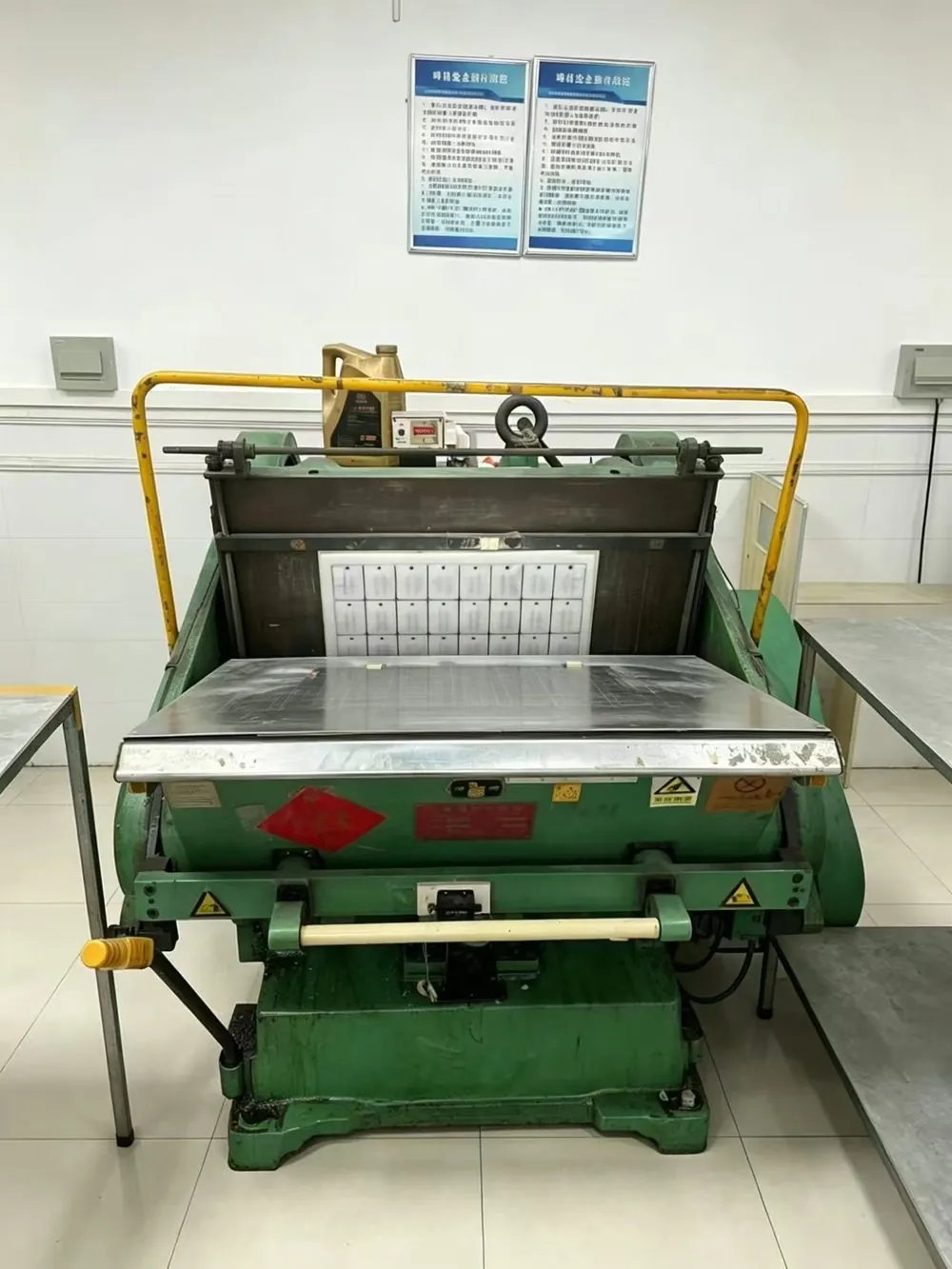
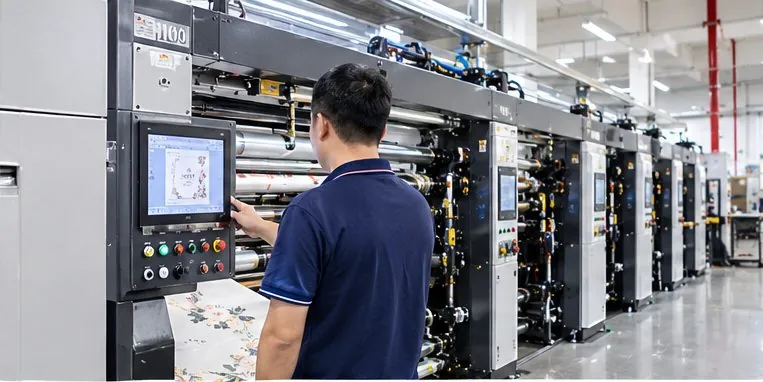
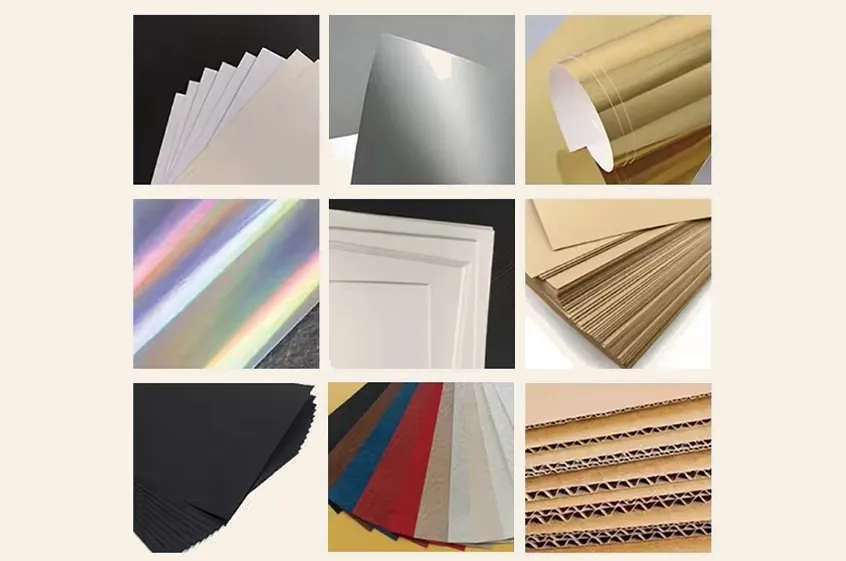
Three structures, three different production methods. Rigid boxes are hand-wrapped around greyboard: heavy, expensive, and the only one that feels like a gift. Folding cartons are a single die-cut sheet machine-glued into a box: cheap, flat to store, but with almost no compression strength. Corrugated mailers are built from fluted board to survive a courier.
Pick by asking three questions: does the box have to protect the product in transit, does it have to sit on a retail shelf, and does the opening moment have to feel like something? Most product launches need one primary structure and a second one for shipping — not one box doing both badly.
The three structures, in plain terms
A rigid box — also called a set-up box or a hard box — is built from greyboard, usually 800 to 1,200 gsm, wrapped in printed art paper. The board gives it the stiffness; the wrap gives it the colour. Because the board cannot be folded, each box is assembled by hand: corners taped, wrap glued and turned in, interior lined. That handwork is why rigid boxes cost what they cost.
A folding carton is what most consumer goods ship in. A single sheet of 300 to 400 gsm board is printed, die-cut, creased and glued along one seam. It arrives flat, pops open in a second, and stacks by the thousand. Almost every step is automated, which is why the unit price is a fraction of a rigid box.
A corrugated mailer uses fluted board — E-flute around 1.5 mm, B-flute around 3 mm — where a wavy inner layer is sandwiched between two liners. The flute is what absorbs impact. Corrugated is the only one of the three designed to be the shipping carton itself rather than something that goes inside one.
| Rigid box | Folding carton | Corrugated mailer | |
|---|---|---|---|
| Board | 800–1,200 gsm greyboard + 128–157 gsm wrap | 300–400 gsm folding board | E-flute or B-flute corrugated |
| Made by | Hand assembly | Machine gluing | Die-cutting and stitching or gluing |
| Typical MOQ | 500 pcs · 1,000 for complex sets | 1,000 pcs | 1,000 pcs |
| Relative unit cost | Highest — roughly 2–4× a carton | Lowest | Low to mid |
| Ships as | Assembled or nested | Flat | Flat, self-assembly |
| Crush resistance | Moderate — dents at corners | Very low | High |
| Best for | Gift sets, cosmetics, jewellery, launches | Retail shelf, pharma, food, accessories | E-commerce, subscription, shipping |
Relative cost is a ratio, not a price. Absolute numbers move with size, print colours and finishing — see how a quotation is built.
When a rigid box earns its price
Rigid boxes make sense when the box is part of the product experience rather than a container around it. Cosmetic sets, perfume, jewellery, premium spirits, limited editions, corporate gifts, and anything where the customer photographs the opening. The weight of the board, the satisfying magnetic snap, the turned-in wrap edge — these are things a folding carton physically cannot imitate.
The usual structures are the magnetic closure box, where hidden magnets hold a hinged lid; the drawer box, a sliding tray inside a sleeve, typically with a ribbon pull; and the lid-and-base box, two pieces, and the cheapest rigid option once volume is high enough to amortise the hand assembly.
Inside, you usually need something to stop the product moving: EVA foam, a die-cut paper board platform, or a flocked tray. That insert is a separate die and a separate cost line, and it is the part buyers most often forget when comparing quotes. A rigid box quoted without an insert is not the same product as one quoted with a fitted EVA cavity.
Two caution points. First, rigid boxes dent. A corner crushed in transit cannot be fixed, so if the box ships by courier on its own, it needs an outer carton — which means you are paying for two boxes. Second, because a rigid box cannot be flattened, it takes freight volume even when empty. See freight and storage below.
When a folding carton is the right answer
A folding carton wins whenever the box has to be cheap, stackable and quick to fill. Retail shelves, pharmaceutical secondary packaging, food and confectionery, cosmetics accessories, small electronics — anything produced in six figures and opened in a hurry.
It is also the structure with the widest print options per yuan, because offset printing on flat board is the most efficient way to put eight colours and a Pantone match onto a small area. Foil, embossing and spot UV all work, and they cost less here than on a hand-wrapped rigid box.
The limitation is structural. A 350 gsm carton has almost no compression strength, so it cannot protect anything fragile, and it cannot be a shipping carton. It also has a visible glue seam and folded edges, which reads as retail packaging rather than as a gift. If your product needs protection, budget for a carton plus a mailer.
When corrugated does the job
Corrugated is the correct answer for any box that travels through a courier network. Subscription boxes, e-commerce orders, sample kits, and the outer carton around a rigid gift box. E-flute gives a thinner, more printable wall that folds like a carton — good for a mailer that has to look presentable when opened. B-flute is thicker and more forgiving, better when the contents are heavy or the route is rough.
The detail that separates a good mailer from a bad one is the interior. A printed interior turns the inside of the lid into a branded surface for free, since the sheet is already going through the press. A die-cut insert or a corrugated fitment stops the product rattling. And the closure matters: a tuck-front mailer is cheaper, a two-piece with a tear strip is friendlier to open.
The trade-off is print quality. Corrugated board is not flat, so fine type and gradients print slightly softer than on a carton. Keep artwork bold, avoid hairlines, and expect a little more dot gain.
What actually drives the cost
Buyers comparing three quotes for "a box" are usually comparing three different products. Four variables explain most of the gap.
Handwork percentage. A rigid box can be 60% labour; a folding carton is almost entirely machine time. Every element that must be placed by hand — a ribbon, a magnet, an insert, a hand-turned wrap — adds cost that does not fall much with volume.
Number of finishing passes. Each of foil, emboss, spot UV and lamination is a separate run through a separate machine. Two passes cost roughly twice one pass in setup, though the per-unit increment is smaller than the setup.
Board grade and size. Greyboard is sold by weight, so a 1,200 gsm box costs more in material than an 800 gsm one before any printing. Board yield per sheet also drops sharply once the box exceeds the economical layout — a 400×300 mm box wastes far more sheet than a 200×150 mm one.
Quantity against setup. Dies, printing plates and make-ready are fixed costs. At 500 pieces they dominate; at 50,000 they vanish. This is why the same rigid box can look expensive at MOQ and competitive at 5,000 — and why MOQ is a pricing question as much as a production one.
Freight and storage: the line nobody quotes
Two boxes with the same unit price can differ by a third in landed cost, because of how they pack.
A rigid box ships assembled or nested. Nested means the lids are stacked inside each other and the bases likewise, which saves maybe half the volume but still leaves you storing air. A thousand assembled rigid boxes can occupy several cubic metres. A thousand folding cartons of the same footprint arrive as flat bundles you could carry.
Courier pricing adds a second penalty: volumetric weight. A rigid box that weighs 200 g but measures 250×200×80 mm is charged on its dimensions, not its mass, so a light bulky box is expensive to ship relative to its value. Corrugated mailers have the same issue but are usually designed around it, with dimensions that fit standard parcel tiers.
Practically: if the box travels to the end customer, design it for the courier's size brackets. If it travels to a warehouse and is filled there, flat-pack whatever can be flat-packed.
How to specify a box properly
Most quotation delays come from an incomplete brief. Six lines cover it:
- Structure — rigid, folding carton or corrugated, and which variant (magnetic, drawer, lid-and-base, tuck-front, two-piece)
- Internal dimensions in millimetres, L × W × H, measured inside the finished box, not the product's outer size
- Product weight and fragility — this decides board grade and whether an insert is needed
- Print — number of colours, Pantone references if you have them, and whether artwork already exists
- Finishing and inserts — foil, emboss, lamination, foam, tray, ribbon, magnet
- Quantity and destination — order quantity, reorder plan, and the country the cartons are shipping to, since that decides packing and documentation
Send those six and any factory can quote in a day. Send "a gift box for our candle, medium size" and you will get three quotes that are not comparable, then spend a week finding out why.
Structural samples before you commit
A white sample — the structure in plain board, no printing — is the cheapest way to check that the product fits, the lid closes properly and the insert holds. We cut those in about three days. The printed sample with your artwork takes five to seven days and is the one you sign off before production.
If you are still deciding between structures, send the product dimensions and a photo of the product. We will tell you which of the three we would make it in, and what each would cost at your quantity — including the insert, which is where the surprises usually are.
Common questions
Is a rigid box worth it compared with a folding carton?
Only if the unboxing is part of what you sell. A rigid box costs roughly two to four times a folding carton of the same footprint, ships assembled or nested so it takes far more freight volume, and needs hand assembly that pushes MOQ to around 500 pieces. If the box is opened once in private and thrown away, or if it has to travel through a courier network on its own, a folding carton or a corrugated mailer does the job at a fraction of the cost.
Can one factory make all three structures?
Often yes, but not always well. Rigid boxes are hand-assembled around greyboard, folding cartons are machine-glued from a single die-cut sheet, and corrugated board is converted on different equipment because of its flute. Many plants specialise in one. Ask which structure is made in-house and which is bought in, because a bought-in structure adds a margin and a queue you do not control.
Which structure should I use for e-commerce shipping?
Corrugated, usually E-flute or B-flute, with a printed interior if the unboxing matters. A rigid box sent through a courier network arrives dented and costs far more in volumetric weight, because it cannot be flattened. A folding carton folds flat and is cheap to store, but it has almost no compression strength, so it needs an outer mailer. Corrugated is the only one of the three designed to be the shipping carton itself.